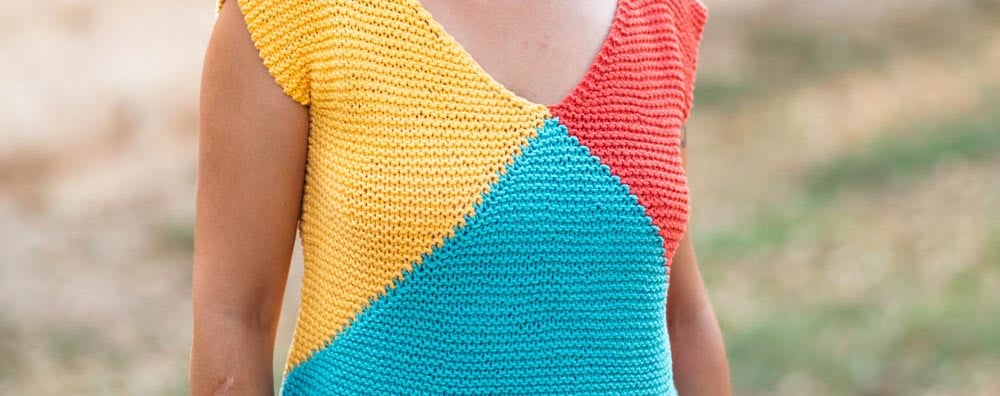
Today we're talking about the intarsia technique, perfect for creating colorful geometric patterns in your two-needle knitting projects. An excellent example of this technique is our Pop Top, a fresh and fun design made with the Intarsia technique and knitted with Rubí Natural Medium.
Knitting with Rubí Natural Medium, one of our most popular cottons, offers you a wide range of shades and combinations for your intarsia projects. In this guide, you will also learn how to prevent yarn bobbins from tangling when working with multiple colors, which is essential in this technique.

What is the Intarsia technique?
Intarsia is a knitting technique that allows you to create large blocks of different colors in the same garment, without the strands mixing or crossing each other. It is ideal for designing striking and geometric patterns with multiple colors. Furthermore, it is a technique suitable for both beginners and more experienced knitters.
Ideas for combining colors with intarsia
Knitting with intarsia offers endless possibilities for combining colors. Here are some ideas to inspire you and make the most of this technique:
-
Similar tones: use different shades within the same color range, such as blues or pinks, to create a harmonious design.
-
Soft tones: opt for powdery colors for a more discreet and elegant result, suitable for any season.
-
Strong contrasts: choose high-contrast combinations, such as black and white, or vibrant colors to achieve a bold and modern look, perfect for standing out with the intarsia technique.

How to knit intarsia with Rubí Natural Medium?
Rubí Natural Medium yarn is characterized by its softness and the versatility of its colors, making it the perfect choice for intarsia projects. You can knit with 2 or more colors, creating unique patterns in stockinette stitch or plain stitch.
This technique is not complicated, but it is important to have practiced crossing the threads beforehand to obtain a clean finish. Intarsia allows for impressive results in less time than other knitting techniques.
Tips for knitting with multiple balls of yarn without tangles
One of the biggest challenges when working with intarsia is preventing the balls of yarn from tangling. Here are some tips for keeping your strands organized:
-
Odd rows (right side of the work): hold the garment in your right hand and place the needle under your left arm, making sure the end of the needle points towards you. This will prevent the threads from tangling as you progress in your intarsia knitting.
-
Even rows (wrong side of the work): hold the strands with your right hand and pass the right needle under the strands counter-clockwise. This will allow you to prepare the left needle for the next row without tangles in your intarsia.
Amount of material needed for your project
Depending on the size you choose, you will need different amounts of Rubí Natural Medium to complete your garment with intarsia. Here's an approximate idea:
-
Size S/M: 8 balls (4 for color A, 2 for each side).
-
Size L/XL: 11 balls (5 for color A, 3 for each side).
Remember to choose a color combination that inspires you. Rubí Natural Medium offers you a wide range so that your intarsia creations are a complete success.
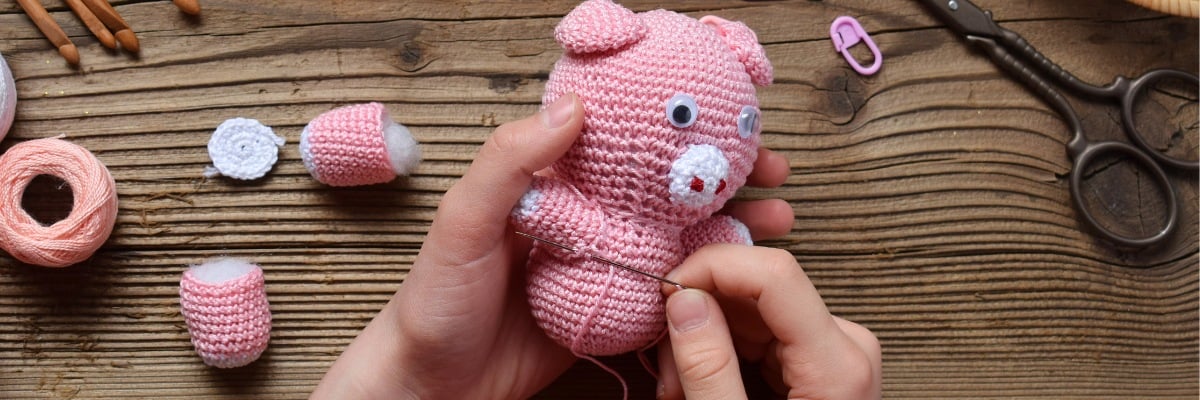
Discover more about Rubí Natural Medium and other products in our store. Have you read our latest article about Amigurumi patterns?
And don't forget to follow us on our social media and tag us when you upload projects knitted with our materials.
Facebook Instagram Pinterest YouTube
Frequently Asked Questions
What needles are best for knitting Intarsia?
It is ideal to use medium-sized knitting needles (between 4 mm and 5 mm), as they provide a perfect balance between tension and ease of work when changing colors with Intarsia.
How to avoid mistakes when knitting Intarsia?
It is essential to correctly cross the strands on the back of the garment and keep the colors well organized to avoid knots and mistakes.